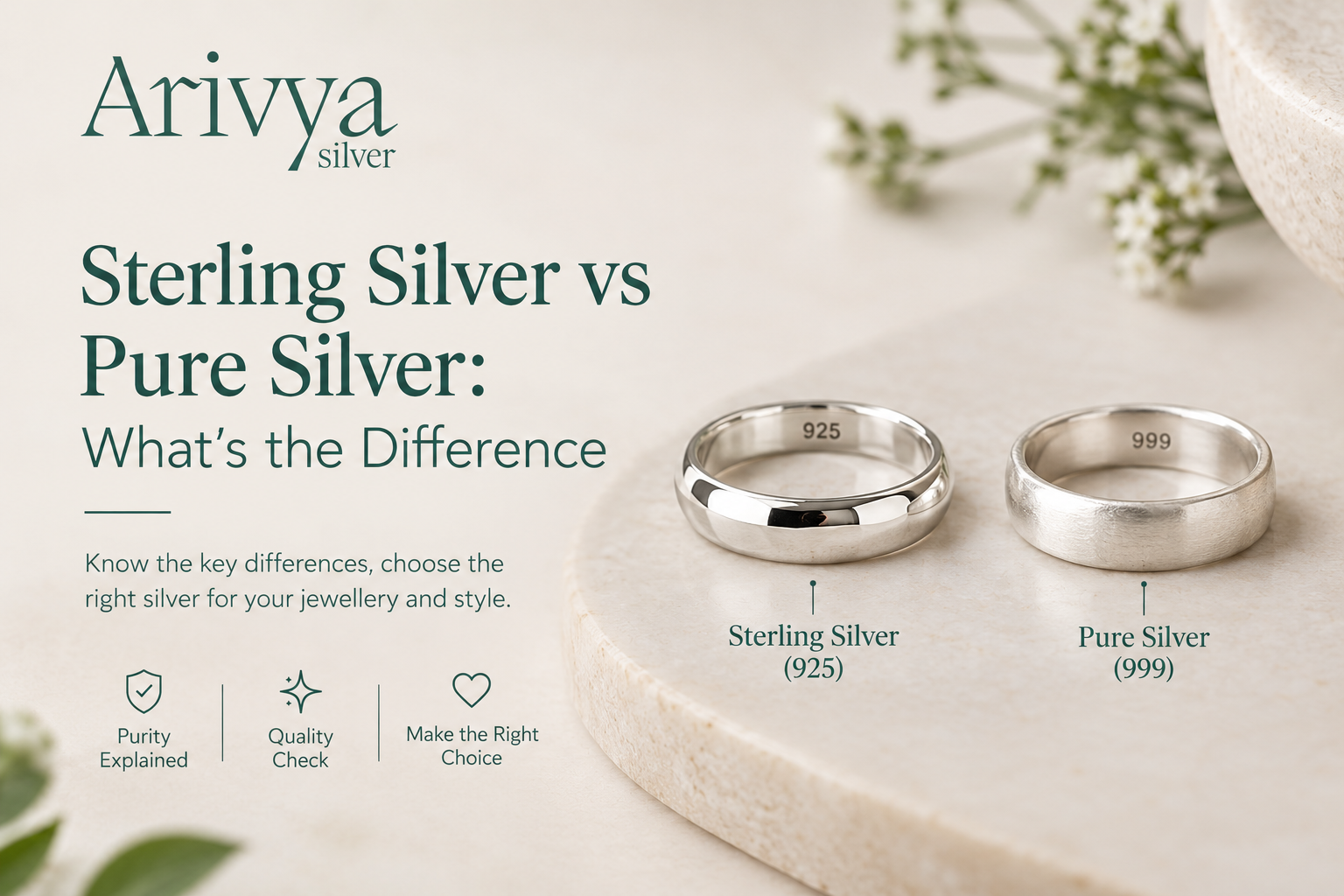
Sterling silver vs pure silver comes down to one trade: purity against strength. Pure silver is 99.9 percent silver and very soft. Sterling silver is 92.5 percent silver blended with 7.5 percent other metal, usually copper, which makes it hard enough to wear every day. If you are buying silver jewellery in India today, that single difference decides how long a ring keeps its shape, how fast a chain darkens, and what you pay at the counter.
This guide is written for the buyer who has already decided to purchase silver and wants to avoid the wrong grade. You will see what each grade means, how the BIS hallmark system works after the September 2025 changes, how to check a piece before you pay, and which grade suits rings, necklaces, earrings and anklets.
The Short Answer Before You Buy
For almost every piece of jewellery, buy 925 sterling silver that carries a BIS hallmark and a HUID code. Choose 999 pure silver only when you want coins, bars or a ceremonial item that will not face daily wear. A 999 ring dents and bends within weeks of regular use, while a 925 ring holds its shape for years. Higher purity also does not give you a maintenance-free piece, because pure silver tarnishes too, only more slowly.
The rest of this article shows the reasoning, so you can verify the claim yourself instead of trusting a seller.
What Is Pure Silver?
Pure silver, also called fine silver, has a fineness of 999, which means 999 parts silver in every 1,000 with only trace impurities. Silver standards lists 999 as the benchmark for fine silver and notes that it is considered too soft for general use. In India, BIS added 999 as a hallmark grade when it revised the silver standard to IS 2112:2025, so a pure silver article can now carry a verifiable stamp, as the BIS summary on Vikaspedia explains.
How Pure Silver Behaves in Jewellery
Fine silver has the whitest and brightest finish of any silver grade. It is also extremely ductile, which means it can be drawn into very thin wire and shaped by hand. Those same traits cause trouble once the piece is worn. A 999 ring band loses its round shape when you grip a steering wheel or a bag handle. A thin hook earring drifts out of position. A clasp wears loose within a season. Scratches also appear quickly, so the mirror polish you paid for dulls faster than most buyers expect.
Why Purity Does Not Equal Longevity
Buyers often assume the purer metal lasts longer. In jewellery the opposite is usually true. Hardness decides how long a design stays crisp, and fine silver has very little of it. A heavier 999 piece can resist bending better than a thin one, but it still marks easily and cannot hold fine detail like prongs, filigree edges or stone settings for long.
Where Pure Silver Makes Sense
Pure silver is the right choice for coins, bars, small puja items such as idols and diyas that sit on a shelf, and decorative pieces that nobody wears hard. BullionStar’s guide to sterling silver notes that fine silver is used mainly for bullion bars and coins, while sterling dominates jewellery and tableware. If your goal is to hold metal as a store of value, 999 gives you the most silver per gram. If your goal is something to wear, it is the wrong tool for the job in most cases.
What Is Sterling Silver (925)?
Sterling silver is an alloy made of 92.5 percent pure silver and 7.5 percent other metal, almost always copper. The number 925 stamped on a piece is its fineness, meaning 925 parts silver in 1,000. It is the grade most Indian buyers meet, and BIS data reported in the Deccan Herald shows that grades 925 and 800 together make up nearly 95 percent of hallmarked silver articles in the country.
Why Copper Is Added
The copper does a practical job. It raises hardness, so the metal resists dents, keeps sharp detail and holds stones in their settings. It also makes the silver easier for a craftsperson to cast, solder and shape into intricate patterns without the metal collapsing. The colour barely changes, because the alloy is still more than 92 percent silver. The trade-off is chemical. Copper reacts with sulphur compounds in air more readily than silver does, so sterling tarnishes faster than fine silver.
Modern Alternatives to Copper
Some makers replace part of the copper with germanium or zinc to slow tarnish. Argentium is the best known example. These alloys still meet the 925 standard, but they cost more, and most jewellery sold in India uses the traditional silver and copper blend.
925 Compared With 800 and Other Grades
BIS now recognises seven silver grades: 800, 835, 925, 958, 970, 990 and 999. Grade 800 contains 80 percent silver and is common in anklets, where weight and price matter more than the finest finish. Grade 925 is the standard for rings, necklaces, earrings and bracelets. If a seller quotes a price for “pure silver jewellery” without naming a grade, ask for the stamp before discussing price.
How BIS Hallmarking Works for Silver Now
Since 1 September 2025, silver hallmarking in India has run on the Hallmark Unique Identification system under IS 2112:2025, replacing the older marking pattern. The Vikaspedia page based on BIS material describes the system in the same terms.
What the Hallmark Shows
A hallmarked silver piece carries three marks: the BIS Standard Mark with the word SILVER, the purity grade, and a six-digit alphanumeric HUID that is laser-marked on the article. You can enter that code in the free BIS CARE app to see the purity, the type of article, the jeweller who submitted it and the testing centre involved.
Is Silver Hallmarking Compulsory?
Not yet. Hallmarking of silver itself remains voluntary, but HUID has been made mandatory on any silver article that is hallmarked. In June 2026, Business Today reported that BIS was assessing the framework and testing capacity needed before making hallmarking compulsory. As of August 2026, Indian Jeweller reported more than 77 lakh silver pieces hallmarked, more than 25,000 registered jewellers and 341 testing centres across 102 districts. That adoption tells you a hallmark is now a realistic thing to expect, and to ask for.
Sterling Silver vs Pure Silver: Side by Side
The table below puts the practical differences in one place. The sections after it explain each row in terms of what you will notice after buying.
Factor | Pure silver (999) | Sterling silver (925) |
|---|---|---|
Silver content | 99.9% | 92.5% |
Other metal | Trace amounts | 7.5%, usually copper |
Hardness | Very soft | Firm enough for daily wear |
Tarnish speed | Slower | Faster, because of copper |
Finish | Brightest, whitest | Slightly warmer, still bright |
Best use | Coins, bars, shelf pieces | Rings, chains, earrings, anklets |
BIS hallmark grade | 999 | 925 |
Durability and Daily Wear
Durability is the clearest point in favour of sterling. A ring, bangle or chain faces knocks, pressure and friction every day, and 925 absorbs that far better than 999. Pure silver is better described as a metal for display than for use. If a piece will be worn for more than a few hours a week, sterling is the practical answer.
Tarnish and Maintenance
Tarnish is a dark layer of silver sulphide that forms when silver reacts with sulphur compounds and hydrogen sulphide in the air. Humidity, cooking fumes, perfume and contact with rubber speed it up. Because copper reacts more readily than silver, sterling darkens sooner than 999. The darkening is a surface film and not damage to the metal. A soft polishing cloth removes light tarnish, and storing pieces in an airtight pouch slows it down. Pure silver is not immune, so neither grade lets you skip basic care.
Price and Value for Money
Per gram of metal, 999 costs more because it holds more silver. Jewellery pricing is not only metal, though. Making charges, design complexity, stone setting and finishing often account for a large share of the final bill. A detailed 925 necklace can cost more than a plain 999 piece of similar weight, and it will usually give you more years of wear. Silver rates move daily, so compare the per gram rate and the making charge separately on every quote.
Skin Sensitivity
Genuine 925 silver made with a copper alloy is considered safe for most wearers, according to BullionStar. Anyone with a known nickel allergy should confirm that the piece is nickel free and hallmarked. A small number of people with very sensitive skin react to the copper content, in which case 999 or a germanium based sterling alloy is worth trying.
Resale and Exchange
Purity and weight set the resale value of silver, and a hallmark with a HUID makes both easier to prove. BIS advises buyers to keep the purchase invoice along with the HUID record. Before you buy, read the seller’s exchange terms. Arivya Silver publishes its exchange and buyback policy on the site, so you can check the conditions before you place an order.
How to Check Silver Purity Before You Pay
A stamp on its own proves little, because a number can be punched into any metal. What protects you is a stamp that can be traced. Run through the checks below before you complete a purchase, whether you are in a shop or ordering online.
Read the Hallmark First
Look for the BIS Standard Mark, the word SILVER, the purity grade and the six-digit HUID. A piece that shows only “925” with no BIS mark and no HUID is self-declared by the seller and cannot be checked independently. On small items such as thin rings or earring posts, the marks can be tiny, so ask the seller to show them under a loupe or point to them in a close photograph.
Verify the HUID in the BIS CARE App
The BIS CARE app is free on Android and iOS. After you enter the HUID, it shows the purity grade, the type of article, the jeweller who submitted it for hallmarking and the assaying centre that tested it, as described in the Deccan Herald report on the first three months of HUID silver. If the app shows a different article type or purity from what you are holding, do not buy the piece.
Simple Tests You Can Do at Home
These tests are rough indicators and cannot replace a hallmark. Silver is not magnetic, so a piece that sticks firmly to a magnet contains a magnetic base metal. A real silver piece also pulls heat from an ice cube faster than plated brass or steel, so the cube melts visibly sooner. Tarnish marks on a polishing cloth are a normal sign of real silver, whereas a piece that leaves no dark residue and shows yellow metal at worn edges is likely plated. A jeweller can run an acid test or an XRF scan for a firm answer, and many will do it while you wait.
Terms That Should Make You Cautious
German silver and nickel silver contain no silver at all. They are nickel, copper and zinc alloys that imitate the colour. Silver plated items carry a thin silver coating over base metal, and the layer wears away with use. “Silver tone” and “oxidised” are finish descriptions and say nothing about metal content. If a listing uses any of these phrases in place of a grade, treat it as a non-silver item.
Questions to Ask the Seller
Ask which grade the piece is, whether it is hallmarked with a HUID, what the making charge is on top of the metal rate, and what the exchange and return terms are. A seller who answers these directly and gives you a proper invoice is behaving as a registered jeweller should. BIS itself advises consumers to buy hallmarked silver from registered jewellers, verify the HUID through the app and keep the invoice, as Indian Jeweller reported in August 2026.
Which One Should You Buy? A Guide by Jewellery Type
The right grade depends on how the piece will be worn. Use the guidance below to match the metal to the product before you open a product page.
Silver Rings
Rings take the most abuse of any jewellery type, so they need the hardness of sterling. A band worn daily sits against your hand while you type, carry and wash, and a 999 band would change shape within weeks. When you browse silver rings, compare the stated grade, the weight and the width of the band. As of 20 October 2026, rings in the Viraasat and Sigma collections on the Arivya Silver site are priced from roughly ₹3,000 to ₹10,000, which gives a realistic range for a hallmarked, designed ring.
Necklaces, Chains and Sets
Necklaces carry weight and flex at every link and clasp, so they benefit from a firm alloy. Sterling also holds engraved and textured detail, which matters on statement pieces. Browse the necklace category for single pieces, and look at the Dhara collection, where necklace sets sit at a much higher price point, to see how design and weight change the cost. For a wedding or festival set that you plan to resell or pass down, keep the HUID record with the invoice.
Earrings
Earring hooks, posts and screw backs are thin, small parts. Sterling keeps them straight and secure. If you have sensitive ears, confirm that the post is nickel free, and think about a germanium based sterling or a pure silver stud for occasional wear. You can compare styles in the earrings category.
Anklets
Anklets are the most commonly hallmarked silver item in India. The government statement carried by the Deccan Herald says payals form the largest share of hallmarked articles and are mostly marked at 800. That grade is acceptable for a heavy anklet when the price reflects it, but you should know which grade you are paying for. Compare listings in the anklet category by grade and weight, and not by price alone.
Gifts and Occasions
For gifts, sterling is the safer choice because the recipient will wear it without worrying about damage. A hallmarked piece with a HUID also gives the receiver a way to verify it. If you want help choosing between designs, the full collections page groups pieces by theme such as Viraasat, Sigma, Aurum, Dhara, Nityam and Swaraa.
Investment and Savings
If your aim is to hold silver as a store of value, 999 bars and coins carry the most metal per rupee of price, with low making charges. Jewellery is a different purchase. You pay for craftsmanship that is not fully recovered on resale, so treat sterling jewellery as something you buy to wear and enjoy, with the metal value as a secondary benefit.
Price, Care and Where to Buy
What Goes Into a Silver Jewellery Price
A silver quote has four parts: the metal value at the day’s rate for your grade, the making charge for the design, any stone or finishing cost, and GST. Ask for each part to be shown separately on the invoice. Two pieces of the same weight can differ widely in price because one is machine finished and the other is hand worked. Comparing only the final price hides that difference and makes a fairly priced piece look expensive, or an overpriced one look like a bargain.
How to Keep Sterling Silver Bright
Put silver on after perfume, lotion and hair spray, and take it off before swimming, cooking or cleaning. Wipe each piece with a soft dry cloth after wearing. Store it in an airtight pouch or a small box with an anti-tarnish strip, and keep pieces apart so they do not scratch each other. Light tarnish comes off with a silver polishing cloth. Avoid rough scrubbing, because it scratches the surface and removes the oxidised detail that many designs are meant to show. If a piece has stones, keep polish away from the settings and wipe the stones with a damp cloth.
Buying Sterling Silver From Arivya Silver
Arivya Silver sells silver jewellery online across bangles, chains, bracelets, earrings, haar, necklaces, pendants, rings and anklets, organised into collections such as Viraasat, Sigma, Aurum, Dhara, Nityam and Swaraa. You can browse the full range in the online store, read about the brand on the About Us page, and check delivery and return conditions in the policies listed in the footer before you order.
Confirm Before You Check Out
Open the product page for the piece you want and read the stated purity, weight and price. If any detail is missing, message the team through the contact page or on WhatsApp at +91 7090925926, and ask for the grade, the HUID and the making charge. The store is based in Yeshwantpur, Bengaluru, and answers queries from Monday to Saturday between 9 AM and 6 PM. The FAQs page covers common ordering questions, so it is worth a look before you place your first order.
Frequently Asked Questions About Sterling Silver vs Pure Silver
Is sterling silver real silver?
Yes. Sterling silver is genuine silver alloyed with other metal, and it contains 92.5 percent silver by weight. It is not plated and not a silver look-alike, as long as it carries a valid 925 hallmark.
Is pure silver better than sterling silver?
Pure silver is better as a metal to hold, and sterling silver is better as jewellery to wear. Pure silver contains more silver per gram but bends and scratches easily. Sterling keeps its shape, which is why jewellers use it for rings, chains and earrings.
Which silver is best for daily wear?
Sterling silver in 925 grade is the best choice for daily wear. Its copper content gives it the strength to handle regular contact, and it holds designs, stones and clasps for years with basic care.
Does pure silver tarnish?
Yes, but more slowly than sterling. Both grades react with sulphur compounds in the air. Sterling darkens sooner because its copper reacts more readily, and a polishing cloth removes the film from either grade.
Is silver hallmarking mandatory in India?
Not as of the latest reports from 2026. Silver hallmarking is voluntary, but HUID is compulsory on any silver article that is hallmarked. BIS has said it is assessing what is needed to make hallmarking mandatory, without announcing a date.
How do I check a HUID on silver jewellery?
Install the free BIS CARE app, choose the HUID verification option and enter the six-digit alphanumeric code from the piece. The app shows the purity, article type, jeweller and testing centre, and these should match what you were sold.
Is 800 silver acceptable?
Grade 800 is a legitimate BIS grade with 80 percent silver and is common in anklets. It is fine when you know you are buying it and the price reflects the lower silver content. Do not pay 925 prices for an 800 piece.
Is sterling silver hypoallergenic?
Most people wear it without trouble, but it is not guaranteed hypoallergenic. The copper in the alloy can irritate very sensitive skin, and nickel in lower quality alloys causes reactions more often. If you have a known allergy, choose a hallmarked, nickel free piece and test it with short wear first.
Can I resell sterling silver jewellery?
Yes. Resale value follows the weight and purity of the metal, and the making charge is usually not recovered. A hallmark, a HUID record and the original invoice make the sale smoother, so keep all three.
Final Verdict: Which Should You Choose?
Choose 925 sterling silver for anything you plan to wear, and choose 999 pure silver for coins, bars and shelf pieces. Sterling gives you strength, detail and years of use, at the cost of faster tarnish that a cloth and a pouch can manage. Pure silver gives you maximum metal content, at the cost of a surface that bends and scratches under normal wear.
Whichever grade you pick, buy a piece that shows the BIS mark, the word SILVER, the purity grade and a HUID you can verify in the BIS CARE app, and keep the invoice. When you are ready to compare designs, open the Arivya Silver store, shortlist the pieces you like, and message the team for the grade and HUID of each one before you pay.
Not a member? Create an account
Already got an account? Sign in here