Sterling silver jewelry is a timeless choice for everyday wear, special occasions, and thoughtful gifting. From classic rings and elegant chains to beautifully crafted bangles and earrings, silver jewelry can complement almost any style.
However, not every piece of jewelry that looks like silver is made from genuine sterling silver. Some pieces are made from other metals and coated with a thin layer of silver.
Understanding how to identify genuine sterling silver helps you make informed buying decisions and choose jewelry that suits your style and budget.
At Arivya Silver, we believe that choosing jewelry should be a simple and enjoyable experience. This guide explains how to identify sterling silver, what to check before purchasing, and how to care for your silver jewelry.
What Is Sterling Silver?
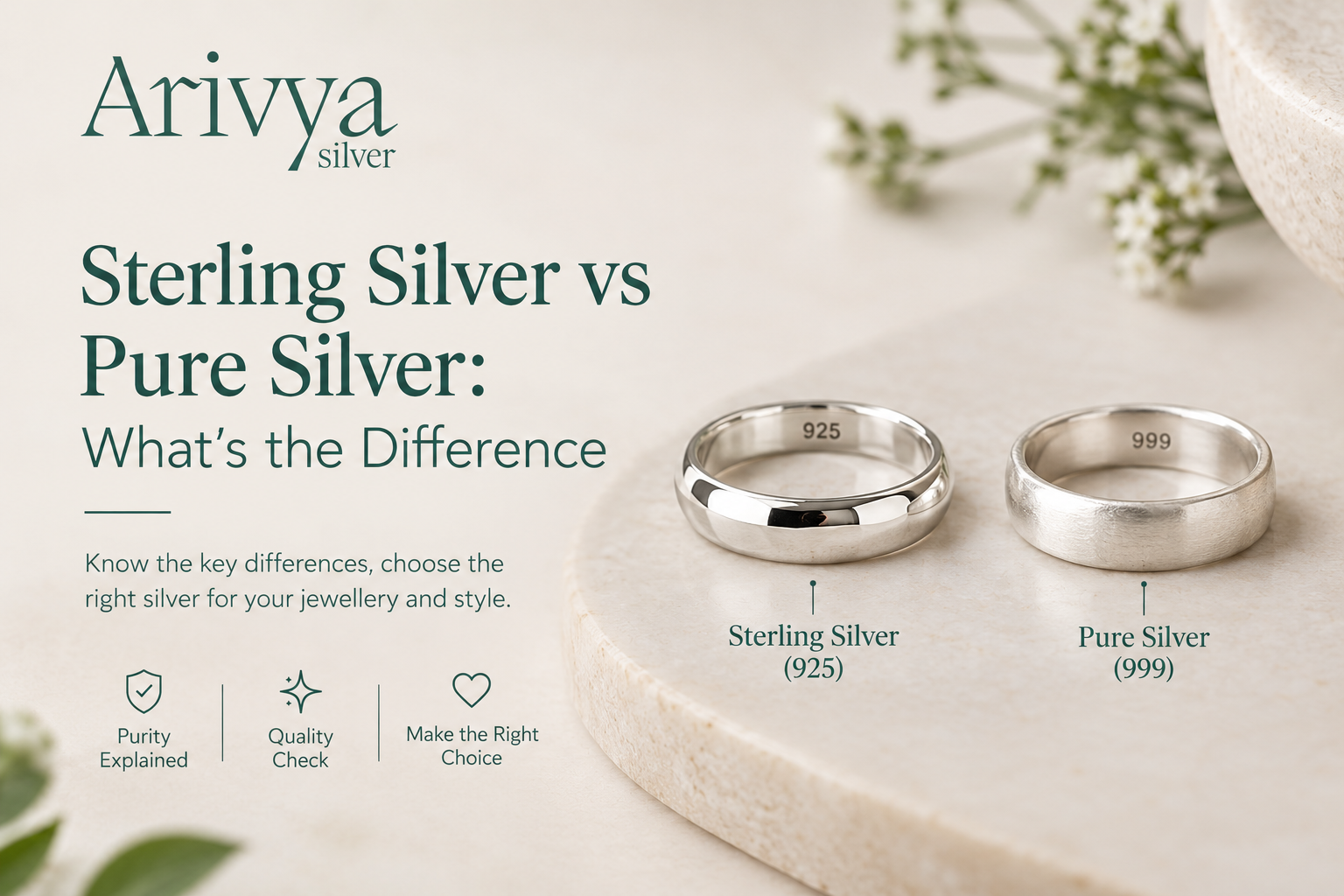
Sterling silver is an alloy containing 92.5% pure silver and 7.5% other metals, usually copper.
Pure silver is relatively soft, which makes it less suitable for jewelry that needs to withstand regular wear. Adding other metals improves its strength and durability while preserving the natural appearance of silver.
This is why sterling silver is commonly used to make rings, chains, bracelets, bangles, and earrings.
You may also see sterling silver described as 925 silver. Both terms refer to silver that contains 92.5% pure silver.
Step 1: Check the 925 Sterling Silver Stamp
The first thing to check when identifying sterling silver jewelry is its purity marking.
Genuine sterling silver is commonly marked with the number 925, which indicates that the metal contains 92.5% silver.
Other markings you may find include:
- 925
- S925
- Sterling
- Sterling Silver
These markings are usually placed in areas that are less visible when the jewelry is worn.
For example, you may find the stamp inside a ring, near the clasp of a chain, on the back of an earring, or on the fastening of a bracelet.
The size and location of the stamp can vary depending on the design.
A 925 stamp is a useful starting point, but it does not guarantee authenticity. Imitation jewelry can also carry this marking.
Step 2: Understand the Difference Between Sterling Silver and Silver-Plated Jewelry
One of the most important things to check before buying silver jewelry is whether the piece is made from sterling silver or silver-plated metal.
Sterling silver contains 92.5% silver throughout the metal alloy.
Silver-plated jewelry, on the other hand, has a thin layer of silver applied over another metal, such as copper, brass, or steel.
The difference matters because the silver coating on plated jewelry can wear away with regular use.
Here is a simple comparison:
| Feature | Sterling Silver | Silver-Plated Jewelry |
|---|---|---|
| Silver content | 92.5% silver | Thin silver coating |
| Metal composition | Silver alloy throughout | Base metal with silver coating |
| Durability | Suitable for regular wear with proper care | Coating may wear away |
| Purity marking | Commonly marked 925 | May carry plating-related markings |
| Maintenance | Requires occasional cleaning | May require additional care to protect the coating |
When purchasing jewelry, read the product description carefully. A piece described as silver-plated is not the same as one made from sterling silver.
Step 3: Examine the Color and Finish
Genuine sterling silver has a natural silver-white appearance.
Examine the jewelry under good lighting and look closely at its surface.
Pay attention to the edges, corners, clasps, and areas that experience regular friction.
Silver-plated jewelry may reveal a different-colored metal underneath when its coating begins to wear away.
However, color alone cannot confirm whether a piece is genuine sterling silver. Other metals can have a similar appearance, and sterling silver can also have different finishes.
For example, polished sterling silver has a bright finish, while oxidized silver has darker details that create contrast in the design.
Step 4: Perform a Magnet Test
Silver is not magnetic, so a magnet can help identify certain imitation pieces.
Bring a strong magnet close to the jewelry without allowing it to scratch the surface.
If the jewelry is strongly attracted to the magnet, it may contain a magnetic metal such as iron or steel.
However, this test has limitations.
Some imitation jewelry is made from non-magnetic metals, while certain jewelry components may contain magnetic materials.
A piece that does not react to a magnet is not automatically genuine sterling silver.
The magnet test should only be used as an initial check.
Step 5: Look for Signs of Tarnishing
Sterling silver can develop a darker surface over time. This process is known as tarnishing.
Tarnishing occurs when silver reacts with sulfur compounds in the air and other environmental factors.
You may notice darkening around engraved details, decorative patterns, and areas that are exposed to air.
This is a natural characteristic of silver and does not necessarily mean the jewelry is damaged.
However, tarnishing alone cannot confirm authenticity. Other metals can also tarnish, and genuine sterling silver may remain bright for a long time depending on how it is stored and used.
Regular cleaning and proper storage can help maintain the appearance of sterling silver jewelry.
Step 6: Check the Quality of the Craftsmanship
The quality of the craftsmanship can provide useful information about the jewelry.
Examine the piece carefully and check whether the design, finish, and details are consistent.
For rings, look at the setting, edges, and inner surface.
For chains and bracelets, check the links and clasp.
For earrings, examine the fastening and the finish around the decorative elements.
Poor finishing does not automatically mean that jewelry is fake, and well-made jewelry is not necessarily sterling silver.
However, examining the craftsmanship can help you assess the overall quality of a piece before purchasing it.
Step 7: Review the Product Details Before Buying Online
When buying silver jewelry online, the product description is one of the most important sources of information.
Before placing an order, check the following details:
Silver purity: Confirm whether the product is made from sterling silver, silver-plated metal, or another material.
Product specifications: Review the weight, dimensions, finish, and other available details.
Product images: Look at close-up images of the jewelry to understand its design and finish.
Care instructions: Check whether the seller provides guidance on cleaning and storing the jewelry.
Return and exchange policy: Understand the conditions for returning or exchanging the product if it does not meet your expectations.
A reliable jewelry brand should clearly communicate the materials used in its products.
Step 8: Consider Professional Purity Testing
If you are unsure about the authenticity of a silver jewelry piece, professional testing can provide greater confidence.
Qualified jewelers and appropriate testing laboratories may use different methods to determine the metal composition.
One commonly used method is X-ray fluorescence testing, which can identify the metals present in a jewelry piece and estimate their proportions.
Chemical testing may also be used, but some methods can damage the surface of the jewelry.
For valuable pieces or jewelry whose authenticity is uncertain, professional testing is more reliable than relying on home tests alone.
How to Care for Your Sterling Silver Jewelry
Once you have purchased genuine sterling silver jewelry, proper care can help maintain its appearance.
Clean Your Jewelry Regularly
Use a soft, clean cloth to gently remove dirt, fingerprints, and surface residue.
For more thorough cleaning, use a silver cleaning product suitable for sterling silver and follow the product instructions.
Avoid harsh chemicals and abrasive materials that may scratch or damage the finish.
Store Your Jewelry Properly
Store silver jewelry in a clean, dry place.
Keeping individual pieces in separate jewelry pouches or compartments can help prevent scratches and tangling.
Avoid leaving silver jewelry exposed to moisture for long periods.
Remove Jewelry Before Certain Activities
Remove your silver jewelry before swimming, exercising, or using cleaning products.
Exposure to chemicals, sweat, and moisture can affect its appearance over time.
Taking these simple precautions can help keep your jewelry looking its best.
Frequently Asked Questions
Is 925 silver the same as sterling silver?
Yes. Sterling silver contains 92.5% pure silver and 7.5% other metals. The 925 marking indicates this silver content.
Does genuine sterling silver turn black?
Sterling silver can develop a dark surface due to tarnishing. This is a natural reaction and does not automatically mean the jewelry is fake.
Can I identify genuine silver using a magnet?
A magnet can help identify certain imitation metals, but it cannot confirm that jewelry is genuine sterling silver.
Is sterling silver suitable for everyday wear?
Yes. Sterling silver is commonly used for everyday jewelry because it is stronger than pure silver. Proper cleaning and storage help maintain its appearance.
How can I check whether silver jewelry is genuine before buying online?
Check the stated silver purity, product specifications, seller information, and available authenticity details. If you have doubts about a valuable piece, consider professional purity testing.
Choose Silver Jewelry That Suits Your Style
Understanding silver purity helps you make better decisions when buying jewelry.
From checking the 925 stamp to reviewing product details and examining the finish, these simple steps can help you identify genuine sterling silver and avoid common buying mistakes.
At Arivya Silver, you can explore thoughtfully designed rings, chains, bangles, bracelets, and earrings for everyday wear and special occasions.
Whether you prefer the traditional designs of the Viraasat collection or the contemporary styles of Sigma, choosing jewelry that suits your personal style makes every piece more meaningful.
Explore Arivya Silver’s collections and find a piece that moves with you through every chapter of life.